



Operational Safety and Occupational Safety
We strive for reducing workplace risks to protect the health and safety of staff and contractors. Our goals are to achieve zero occupational injury and incident.
Implementation of Occupational Safety and Health Management
Occupational Health and Safety Policy and Target
To establish a safe and healthy workplace with comfort while consistently lowering the rate of workplace accidents and disasters, FENC established Occupational Health and Safety Policy as the highest guiding principle governing the management of safety and health of the Company. With “risk control” and “continuous improvement” as the management principle, operational safety is our utmost concern. The Company takes an active stand toward improving the work environment, manufacturing equipment and operational approaches. Based on risk assessments and other mechanisms, the Company sets up prioritization and action plans to ensure the safety and health of the workers (including employees and who are not employees (the contractors of the Company)) and stakeholders.
⇥ Occupational Health and Safety Policy
Executive Support and Involvement in Occupational Safety and Health
During the quarterly FENC Board meetings, the president from each Business presents the Occupational Safety and Health Management Report compiled by the Labor Safety and Health Department from the headquarters. In 2025, 4 reports were presented. The Board serves the supervisory role and conducts review and questioning over the report. Improvements needed will be acted upon at production units based on Board resolutions to ensure proper occupational safety and health management.
Continuous Operation of Occupational Safety and Health Management
As of the end of 2025, the occupational safety and health management system has been implemented at all FENC sites.
- The system has been implemented at 100% of the FENC production sites within the scope of this report, covering 100% of FENC workers (employees and contractors). Internal audits were also completed at 100% of the production sites. Among them, 17 have obtained the ISO 45001 certification for external audits, which represent 90% of FENC workers (employees and contractors).
- Conducts related to occupational safety and health management; worker engagement; consultation and communication; prevention and mitigation of occupational safety and health impacts directly related to job duties are carried out in accordance with the stipulations in the occupational safety and health management system.
Risk Identification, Assessment and Control
Occupational Safety and Health Policy and principles governing FENC production sites are as follows:
- The incorporation of new production lines, production processes or equipment is governed by Change Management Process. An application for change shall be filed and the process includes self-assessment on risk and control, change review/supervisor approval, pre-launch evaluation and closing.
- For operations involving relevant raw materials, products, activities, and services, employees connected to these tasks actively participate in revising operational regulations for risk identification and risk assessment—specifically targeting areas that may cause injuries, pose health risks to workers (employees and contractors), or lead to equipment loss.
- Improvement goals shall be established based on risk levels and distribution of resources. Hardware improvement takes the priority, followed by control measures such as administrative management with special plans or operational guidelines. Implementation of the control measures are strictly monitored to minimize risks. Operation of control mechanisms is based on Regulations Governing Risk Identification, Assessment and Control set forth at each plant.
- Plans and implementations regarding overwork, workplace violence and the protection of the health of the middle-aged and elderly as well as maternity care at FENC production sites are conducted in accordance with local regulations. There were no irregularities in 2025.
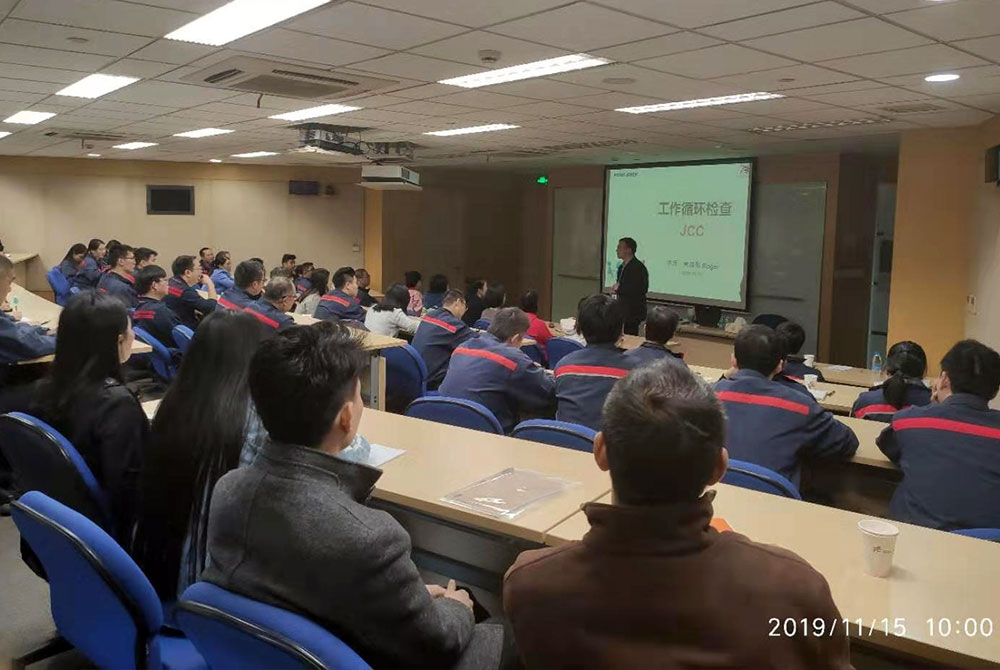
- All production sites arrange risk control training for employees. In 2025, 96 sessions were held with 3,325 employees completing 9,258 training hours.
Hazard Recognition, Assessment and Analysis Procedures at Production Sites
.png)
Building Workplace Safety and Health with Labor-Management Participation
FENC establishes Occupational Safety and Health Committee at production sites, serving as the highest authority at each organization on the review and discussion of safety and health management. Setting up labor representatives in accordance with the seat ratio stipulated by regulations. The Committee convenes quarterly to determine the formulation, coordination and supervision of safety and health related issues at each plant to ensure full implementation. Contractors engagement and communication please refer to Stakeholder Dialogue and Sustainable Supply Chain Management.
Occupational safety and health management is one of the priority concerns when it comes to labor relations at FENC. The following subjects are included in the labor relations meetings, Occupational Safety and Health Committee meetings, and collective bargaining agreements with employees:
- Provide personal protective equipment.
- Implement labor relations management and establish the occupational safety and health committee with labor and employer representations.
- Involve labor representatives in the health and safety inspection, review and investigation.
- Provide job-related training for workers.
- A clear reporting and grievance mechanism for employees encountering health or safety issues is established to ensure their right to refuse unsafe work and protect them from being punished for the refusal.
- Schedule regular health checkups for workers.
- Comply with regulations from International Labor Organizations.
- Clearly establish safety and health goals and ways to achieve such goals.
The Occupational Safety and Health Committee
Operational Sites | Number of Committee Members | Percentage of Worker Operational Sites Representatives |
Headquarters | 11 | 36% |
Hsinpu Chemical Fiber Plant | 20 | 50% |
Kuanyin Chemical Fiber Plant | 20 | 35% |
Kuanyin Dyeing and Finishing Plant | 34 | 47% |
OPTC | 20 | 40% |
FEFC | 13 | 38% |
OGM | 20 | 50% |
FEIS | 30 | 73% |
WHFE | 19 | 32% |
Tech Textiles Plant of OTIZ | 48 | 67% |
Knitting & Dyeing Plant of OTIZ | 63 | 67% |
FEIW | 23 | 74% |
FEAZ | 30 | 50% |
FEAV | 51 | 14% |
FENV | 39 | 10% |
Polyester Plant of FEPV | 130 | 66% |
Knitting & Dyeing Plant of FEPV | 18 | 67% |
FIGP | 112 | 88% |
APG Polytech | 10 | 50% |
PFEM | 19 | 53% |
Reinforcing Safety and Health Awareness Through Training
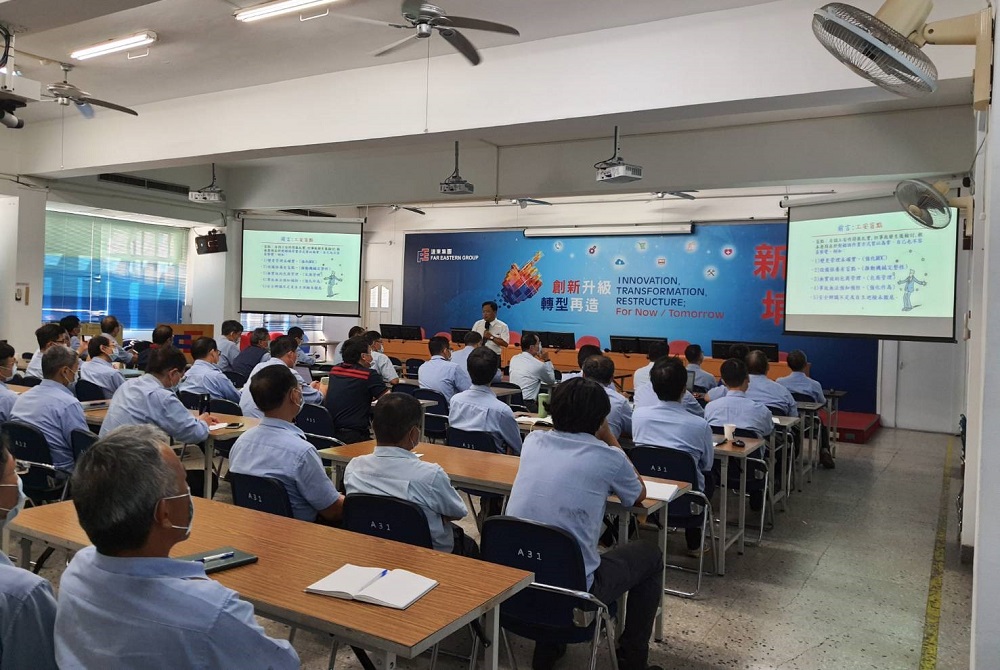
FENC provides regular training to make sure that every employee is familiar with occupational safety and health regulations as well as the management mechanism. The total occupational safety and health training hours accrued by FENC and contractor employees are 264,180 and 15,059 in 2025, respectively.
↪More information:Employee and Contractor Safety and Health Personnel Training Statistics
Chemical Safety Management
All production sites of FENC have established chemical management regulations of chemicals based on Globally Harmonized System of Classification and Labelling of Chemicals (GHS).
Chemical management at all production sites places are according to the items as following:
- Chemical management at all production sites places an emphasis on source management. When procuring hazardous chemicals, the manufacturer, importer or supplier must provide the hazardous label and Safety Data Sheets (SDS). The same information is required when changes are made to existing data.
- Upon the receipt of incoming chemicals, on-site personnel or designated user departments are mandated to conduct rigorous acceptance inspections in accordance with hazard labels, Safety Data Sheets (SDS), and applicable regulations. Furthermore, we actively implement Hazard Communication Programs and maintain comprehensive chemical inventories.
- Post identification for hazardous chemical and prepare safety data sheet (SDS).
- The Company utilizes Chemical Control Branding (CCB) to evaluate the likelihood of exposure (usage and the degree of spread) and takes corresponding or control measures to mitigate risks. When changes occur to the types of chemicals as well as operational or production procedure, exposure assessment must be conducted again within 3 months before or after the changes occur.
- Waste liquids and containers for chemicals are disposed of and treated by qualified waste disposal companies in accordance with the regulatory requirements.
- To track and ensure the health of employees responsible for chemical operation, special health checkups are provided and their work environment is monitored every six months
Grievance / Reporting / Acceptance Mechanism Related to Hazardous Chemicals
.png)
Operational and Occupational Safety Enhancement Campaign–Worker Engagement
1. 2025 Priority Tasks Implemented by the SHEF Task Force for FENC Production Sites in Mainland China:
- A total of 13 training sessions were offered to address the needs of all units, and a total of 299 employees took part, amounting to 900 training hours.
- Safety Risk Identification and Assessment campaigns were held to assist with field operations and training at each plant as ongoing efforts to improve risk assessment capabilities and safety awareness among employees.
- The SHEF Task Force continues to encourage self-initiated accident reporting while ensuring thorough investigation and improvement.
- The most common occupational accidents/incidents that had occurred at FENC sites over the past six years since the SHEF Task Force was established were compiled into a booklet and shared among all sites for reference, improvement and prevention, keeping similar accidents from recurring.
- The incorporation of intelligent systems is in progress at all FENC sites. Among them, FEAZ set up an official account on WeChat; FEIW established an accident reporting system; the knitting and dyeing plant of OTIZ built an equipment and facility management system.
- The SHEF Task Force provided assistance with hazard identification at the Suzhou and Wuxi plants, specifically targeting the heat transfer fluid, natural gas and boiler systems.
- Four issues of the SHEF quarterly magazine were published. The content, which was gathered from all FENC production sites in mainland China, featured safety risk identification; standardization of safety production; technologically empowered safety; safety of chemical storage and usage. The magazine also shared 82 new regulatory standards related to operational and occupational safety.
2. Approval of Performance Review for the Occupational Safety and Health Management System at Kuanyin Chemical Fiber Plant and FEFC
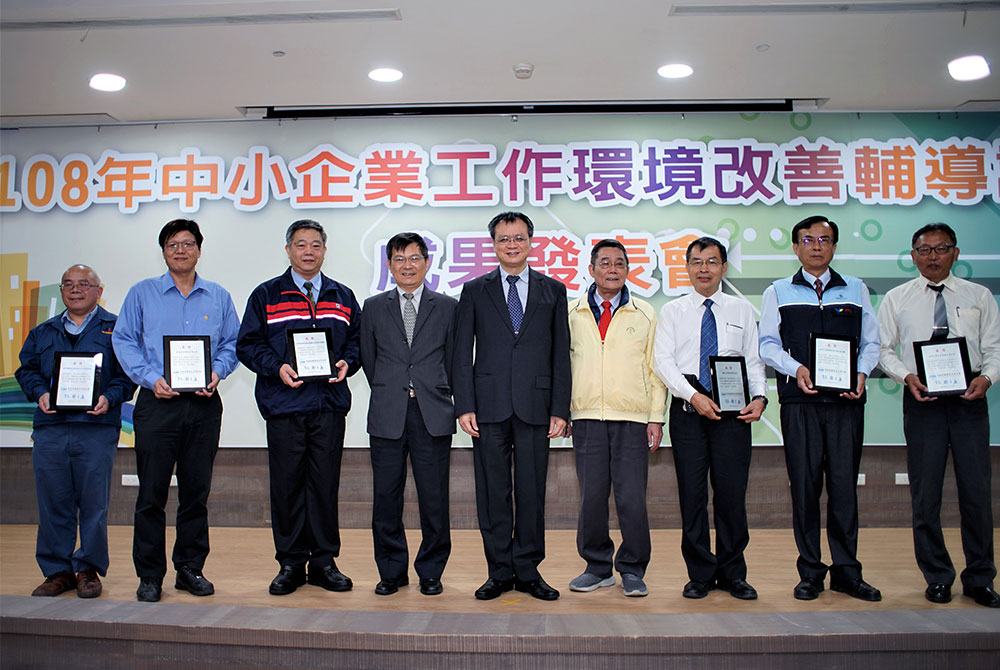
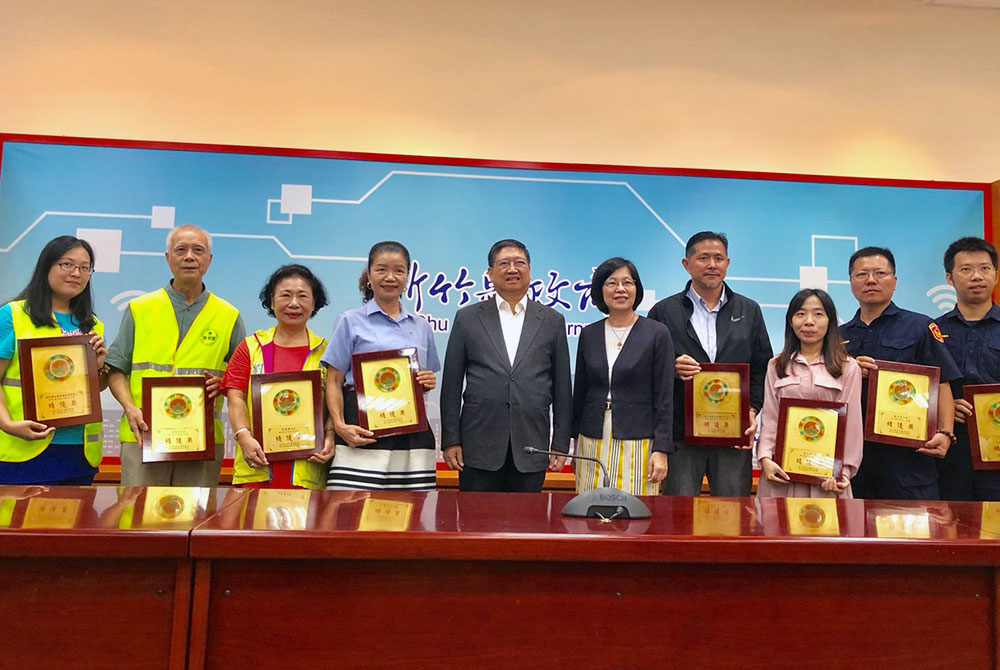
To encourage self-management over occupational safety and health, the Ministry of Labor has commissioned accredited agencies and local labor inspection offices to review occupational safety and health management systems of business entities. Kuanyin Chemical Fiber Plant and FEFC voluntarily performed and submitted the self-evaluation of their systems, and both have been approved by the Ministry of Labor with validity periods from July 26, 2023 to July 25, 2026, and from June 29, 2024 to June 28, 2027, respectively.
Facility Improvement for Operational and Occupational Safety–Bolstering Safety Protection
The primary goal of improving facility safety is to protect employees and maintain the stability of the working environment. Through protective measures and equipment optimization, potential risks and occupational incidents are minimized, bringing the facilities on par with the latest regulatory and industry standards and reinforcing the corporate image as a safe workplace, which not only safeguards employee health, but improves productivity. While reducing operational risks and related costs, a safe working environment also helps FENC achieve sustainable operation. Safety improvement projects at FENC sites during the reporting year are as follows:
1. Enhancing protection at OGM with updated safety helmets
OGM ensures the functionality and regulatory compliance of the PPE to protect employee safety, improve comfort and boost efficiency. To minimize safety risks induced by aging or damaged equipment, OGM replaces safety helmets with a five-year service life and above for general operations. For indoor and outdoor high-temperature environments, safety helmets with a three-year service life and above are removed. In 2025, 142 helmets were replaced, representing a replacement rate of 65%. Among the new helmets, 53 come with retractable goggles, providing additional protection for employees.
2. Installing protective shields for rotating equipment at FIGP
FIGP has installed 84 protective shields on the rotating components of factory equipment in order to prevent operators or other objects from accidentally coming into contact during high-speed rotation, thus reducing the risk of injuries resulting from being caught in/between, cuts or collisions. The shields also isolate hazardous areas, keeping foreign objects from causing equipment damages or production interruptions. Aside from ensuring personnel safety, the shields stabilize equipment operation, which reduces accidents and maintenance costs, improves production efficiency and enhances safety management. In addition, FIGP has introduced an incentive system to encourage employees. By presenting bonuses to those who bring forth improvement proposals, the entire FIGP can work together towards reducing occupational risks and accidents.
Smart Transformation for Operational and Occupational Safety–Application of Safety and Health Technology
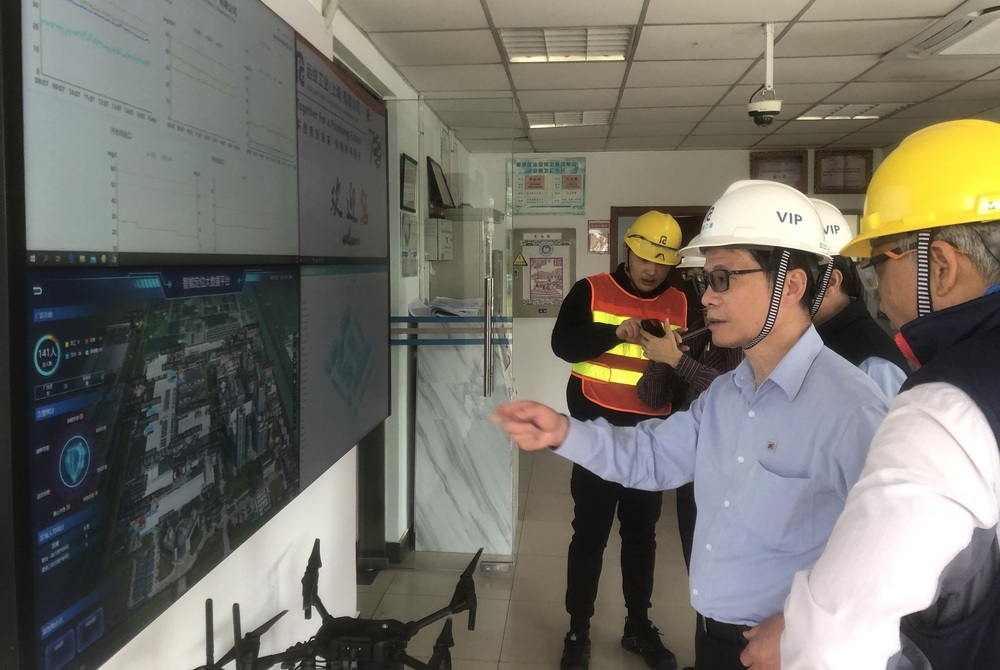
The 2025 Labor Inspection Directives issued by the Ministry of Labor emphasizes the application of occupational safety and health technology and the use of smart technology to improve the efficiency of occupational safety management. Potential risks and accidents can be prevented and minimized through real-time monitoring, data analysis and early warning. Smart application projects for safety and health at FENC sites during the reporting year are as follows:
1. Early warning and intelligent monitoring for minor leakage of heat transfer fluids at Hsinpu Chemical Fiber Plant
Hsinpu Chemical Fiber Plant has started a process safety improvement program targeting the risk of minor leakage in the pump rooms and pipelines for the synthetic and Dowtherm heat transfer fluids. The plant developed a CCTV+AI smoke detection system, which overcomes the limitations of existing industrial gas detectors with its ability to perform consistently amid variable on-site conditions. The goal is to issue early warnings when traces of smoke are detected from minor leakage during beginning stages, which in turn reduces possible impacts of explosions and fires on the safety of personnel, equipment, assets and the environment.
2. Intelligent chemical filing and referencing system at FEFC
According to the Regulations Governing Designating and Handling of Priority Management Chemicals enacted by the Ministry of Labor, a report on priority management chemicals in use during an operation must be filed annually with the authority when the concentration and aggregated quantity constitute health hazards. However, given the vast number of chemicals on the list of government-issued priority management chemicals, cross-referencing manually would not be efficient. Therefore, FEFC developed a smart system that automatically downloads the list of chemicals from the authority and compares it with the one from the plant. AI tools are leveraged to cross-reference the chemicals used by the company and generate a matching list. Users then manually input the "weight percent concentration" and "annual aggregated quantity" to precisely identify the items required for regulatory reporting. Overall, the system has saved time and manual labor while increasing accuracy.
Strengthening Emergency Response with Safety Drills
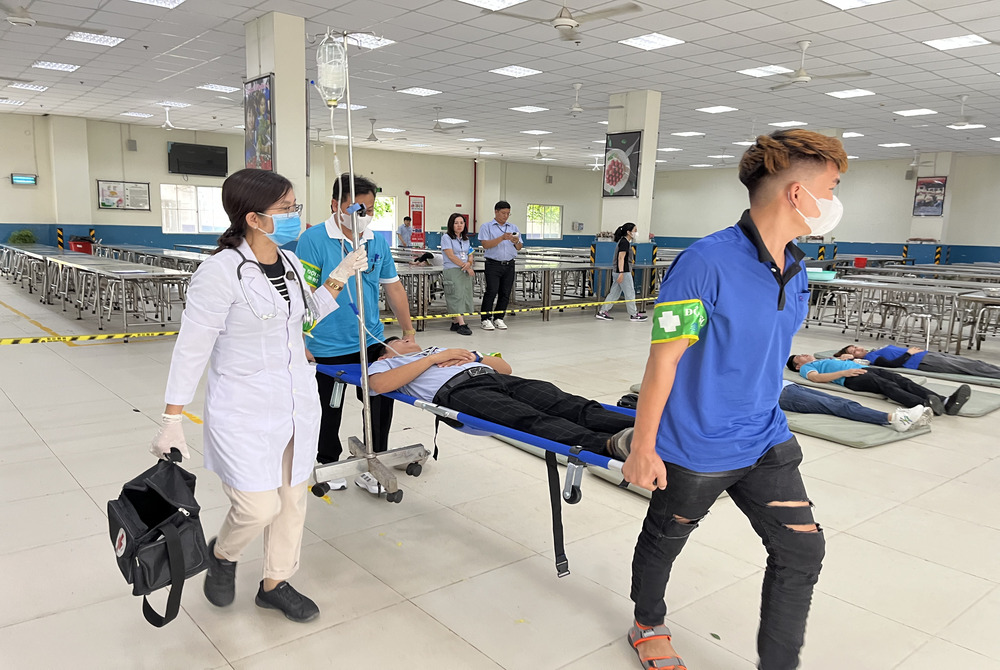
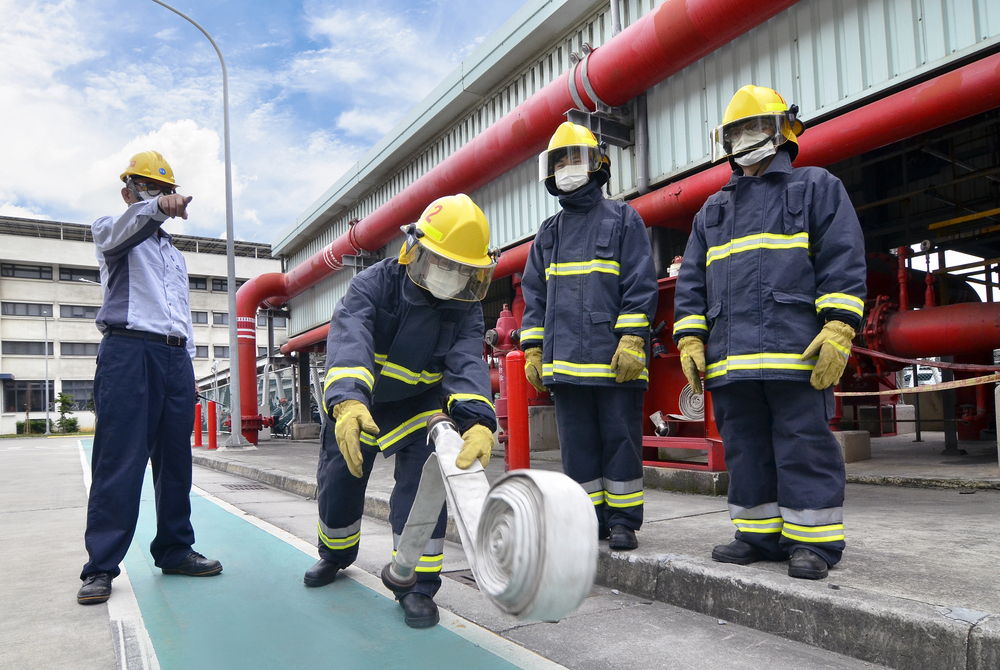
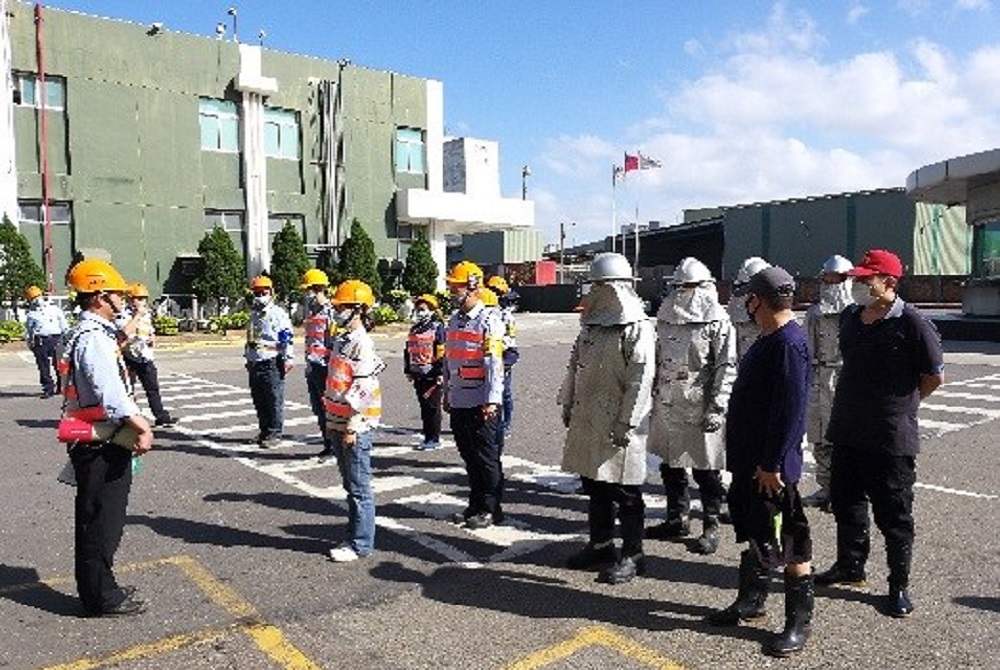
FENC has a set of crisis response regulations in place, which is applicable to all FENC sites. Among the crises covered in the regulations are natural disasters, energy shortages, occupational incidents, environmental incidents or protests, labor disputes, epidemics of notifiable infectious diseases, operational disruption and cybersecurity risks.
To activate emergency response at the earliest possible moment and minimize injuries, fatalities and production losses, FENC conducts hazard identification and risk assessment for its production sites by factoring in geographical environment, hazardous chemicals used, distribution of natural disasters and types of disasters that could be induced. The results then dictate the control measures as well as emergency response procedures, training and drills targeting various disaster scenarios and probabilities to be established for each production site.
During an emergency, all production sites shall follow the protocol established for emergency response and notification procedures. Staff shall identify the disaster, notify applicable units and personnel, proceed immediately to rescue work and engage in damage control to keep the situation from worsening. Ongoing assessments of on-site conditions shall be made to minimize harm to the staff, property and environment with adequate treatment provided to prevent secondary disasters. The unit responsible for the incident shall conduct thorough reviews over the cause, propose improvement strategies and file an incident report. The unit shall also engage all applicable units regarding the incident to prevent future occurrences.