



Sustainable Supply Chain Management
Supplier management policy provides common set of standards for procurement to achieve sustainable supply chain management.
FENC is a vertically integrated industrial conglomerate that spans across the petrochemical, polyester and textile industries with vast and complex procurement handlings. Supplier selection, management and ESG risk assessments are conducted by the FEG Purchasing Center as well as the procurement departments and units responsible for primary raw materials at all FENC sites. The goal is to enhance transparency and encourage collaboration across the entire supply chain.
FENC is fully aware of the crucial role of supply chain management in corporate sustainability as it strives to keep this management mechanism functioning and effective. The Board serves as the highest supervisory and decision-making entity overseeing the sustainable supply chain management plan. The implementation, outcome, risk assessment and improvement plan of supplier sustainability management are submitted to the Sustainability Committee under the Board for review and oversight, keeping the course of supply chain development in line with the overall sustainability strategies and helping FENC form responsible global partnerships.
Responsible and Resilient Supply Chain Management
Management Policy
FENC operates globally with locations spanning across Taiwan, mainland China, Vietnam, Japan, Malaysia and the U.S. The Company is committed to integrating ESG standards into supply chain management and supports this management framework with well-defined policies. Supplier management rules that respect local regulations and production needs at each FENC site have also been established.
1. Sustainable Supply Chain Management Policy
The Sustainable Supply Chain Policy sets clear expectations regarding the labor rights, environmental practices and ethical conducts for all suppliers. With the intent of building long-term supplier partnerships founded on trust, the policy covers integrity governance, climate action, human rights protection and performance improvement. While FENC applies the Quality, Cost, Delivery, Service framework and focuses on ESG performance, efforts are also put into helping partners strengthen sustainability capabilities. Suppliers are evaluated and selected based on comprehensive performance, and the policy serves to aspire FENC and its suppliers to adhere to the standards, working together to build quality and resilience for the supply chain.
⇒Sustainable Supply Chain Management Policy
2. Supplier Code of Conduct and Corporate Social Responsibility Commitment Statement
To collaborate with suppliers on our mission to accomplish sustainability development goals, FENC refers “Responsible Business Alliance Code of Conduct” to establish “Supplier Code of Conduct and Corporate Social Responsibility Commitment Statement” and requests suppliers signing.
The Number and Purchase Amount Percentage of Suppliers Signing “Supplier Code of Conduct and Corporate Social Responsibility Commitment Statement”
.png)
Note: |
⇒ Supplier Code of Conduct and Corporate Social Responsibility
Sustainable Procurement ang Green Procurement
Green procurement at FENC amounted to NT$3.1 billion in 2025 with the majority going to the purchase of recycled raw materials. To FENC, green procurement is a key strategy to manage environmental risks and achieve low-carbon transition for the supply chain. Hence, it has been incorporated systematically into assessment mechanisms related to environmental, safety and chemical management as components in the procurement and supplier management protocols. The intent is to improve resource efficiency and product compliance by reducing potential environmental risks and operational disruption.
Compliance with environmental and occupational health and safety regulations are required for the procurement of raw materials, equipment and outsourced services. Additionally, products and services with lower environmental impacts are given priority status. The evaluation criteria include energy and resource efficiency; GHG emissions, which include upstream emissions; waste and water resources management; the use of and alternative to hazardous chemicals. Environmental impacts are being assessed through phased incorporation of life cycle assessments. These requirements, along with the restricted/manufacturing restricted substances lists, raw material traceability and packaging reduction and recyclability have been included in the Supplier Code of Conduct and Corporate Social Responsibility Commitment Statement.
Critical suppliers also undergo regular ESG performance assessments. The results will facilitate the risk classification, auditing and coaching schemes in the future. The assessment is also integrated into the supplier selection, renewal and classification management process, forming a standard, audit, improvement and tracking framework.
ESG-Based Supplier Selection and Evaluation
1. Selection process
To keep procurement decisions aligned with ESG standards, the procurement units conduct regular reviews over current purchasing practices and processes to stay in line with the Supplier Code of Conduct and Corporate Social Responsibility Commitment Statement. The internal review is a proactive mechanism that prevents potential conflicts between general purchasing and ESG requirements, ensuring responsible procurement at FENC.
In the practice of selecting merchants, Procurement units conduct written or on-site evaluations of new suppliers, covering environmental and social aspects, and classify them based on selection criteria. Additional criteria are established for different types of procurement projects, and all applicable clauses are stated in the contract to ensure compliance.There are 976 new suppliers in 2025, and 970 (99%) of which have been evaluated.
In addition, for specific risk areas, FENC established the plan to integrate information security management with procurement processes to evaluate information security among its ICT suppliers. The suppliers are categorized and classified based on the result as a reference for procurement decisions and to reduce information security risks. Meanwhile, the Company continues to strengthen supply chain information security management to address growing cybersecurity threats. Please refer to Fortifying Digital Resilience for the details.
2. Regular evaluation
At the beginning of each year, FENC conducts comprehensive performance evaluations for major suppliers from the previous year. In 2025, on-site audits were executed for 82 suppliers. The assessment results serve as the decisive criteria for procurement continuation. Suppliers failing to meet the standards are placed on a watchlist and provided with targeted improvement recommendations. Should they fail to demonstrate improvement after engagement, the partnership will be directly terminated.
In June 2024, FENC started requiring that critical suppliers complete the supplier ESG survey to evaluate their ESG performance. The results are analyzed as the basis for formulating the supplier ESG improvement plan. In 2025, 100% of critical suppliers (1,013 companies) completed the survey and were supported with development measures.
The following table presents a summary of supplier assessments conducted by the procurement units at FENC’s global production and operation sites in 2024. The evaluations covered environmental, social, and governance (ESG) aspects. If any significant negative impacts were identified during the assessments, the Company would either assist the supplier in making improvements or terminate the contract, depending on the severity of the issue. No suppliers were identified as having negative impacts in 2025.
Note: “Critical supplier” refers to the supplier of FENC’s main raw materials and suppliers reaching NT$1 million in a single transaction with the main procurement unit within the reporting year.
Supplier Assessment Aspects and Number of Suppliers in 2025
Assessment Aspect | Environmental | Social | Governance |
Total Number of Selected Suppliers | 6,422 | 6,422 | 6,422 |
Number of Suppliers That Have or May Have Negative Impact | 0 | 0 | 0 |
Number of Suppliers That Have Made Improvement | 0 | 0 | 0 |
Number of Supplier That We Have | 0 | 0 | 0 |
Note: The environmental category includes GHG emissions; energy and resource efficiency; water resources management; air pollutant emission management; waste management; hazardous substance management; biodiversity management. The social category includes human rights; no forced labor; child labor; working hours; wages and benefits; freedom of assembly/association and collective bargaining; diversity and equality; maternal protection; privacy protection; employment stability; training; health and safety management. The governance category includes ethical management and anti-corruption; risk management; information security management; grievance channels; regulatory compliance; conflicts of interest; product management. |
Priority Status for Local Suppliers
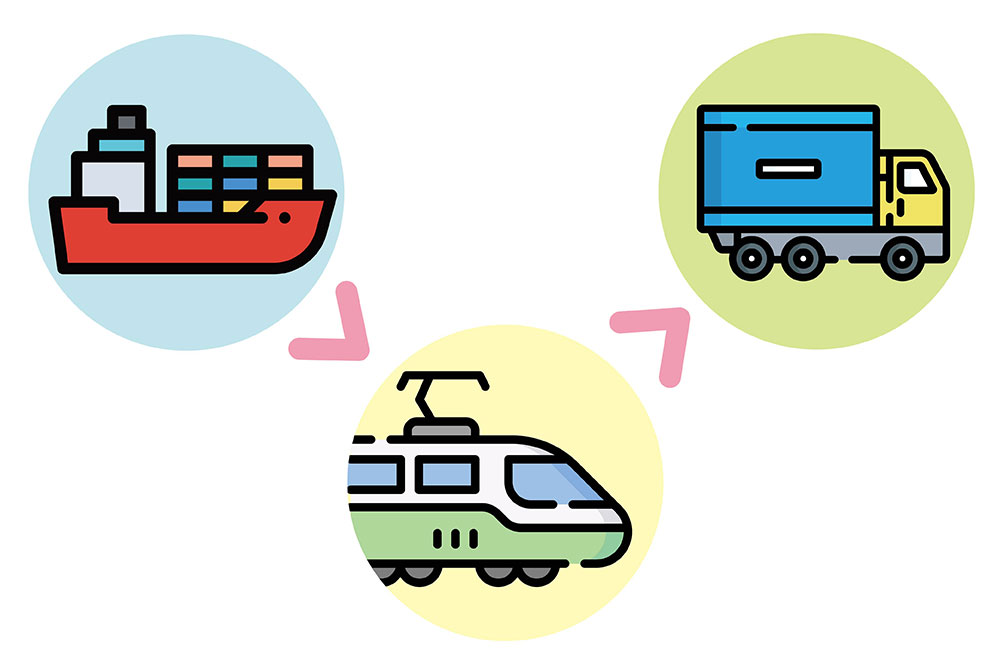
FENC gives priority consideration to local suppliers when it comes to procurement. Such policy promotes local economic development and allows the Company to provide better after sales service. APG Polytech is located in the state of West Virginia in the U.S. The inland position makes the railway its main mode of transportation. Therefore, APG Polytech gives priority status to suppliers within close proximity, which cuts delivery time as well as carbon emissions.
↪更多資訊:Percentage of Procurement from Local Suppliers
Supplier Engagement
FENC engages in dialogues with suppliers through various channels in order to monitor supplier operation.
- The Company provides a mailbox for supplier feedback on its website. Grievance channel and procedure please refer to “Contact and Grievance Channel" of 2025 Sustainability Report.
- The Company monitors the suppliers and contractors monthly and conducts dialogue meetings. The FEG Purchasing Center visited 82 suppliers in 2025.
- The Company holds quarterly supplier meetings to conduct exchange and recognize suppliers for their excellence.
- The Company holds ad hoc technology exchange meetings with suppliers.
- Partner with suppliers on mutually benefitting projects.
- Over the past two years, FENC conducted GHG inventory training courses, with a total of 54 procurement personnel and suppliers completing the training.